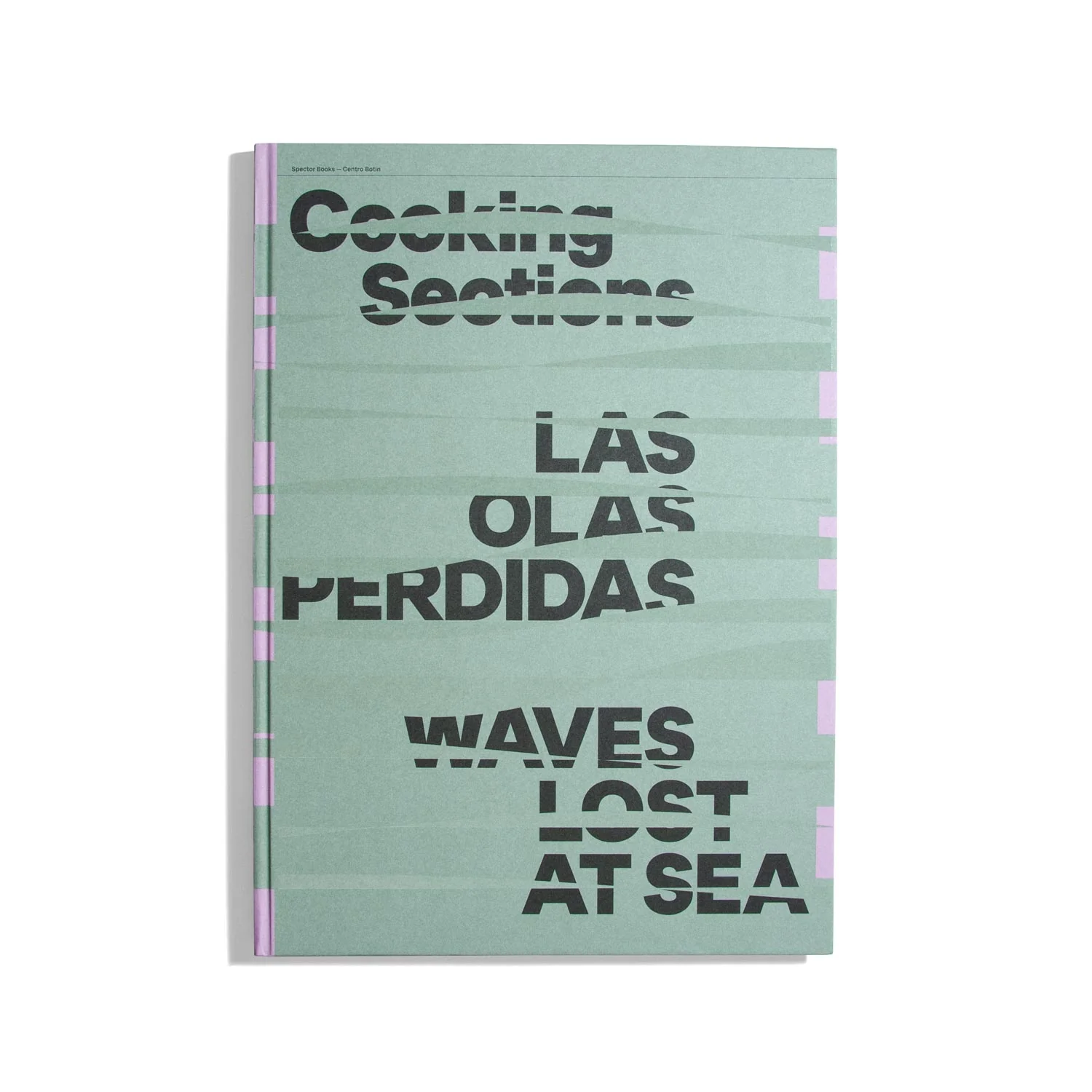
Las Olas Perdidas / Waves Lost at Sea - Cooking Sections
Waves Lost at Sea traces the evolving practice of Cooking Sections—founded in London by Daniel Fernández Pascual and Alon Schwabe—whose work spans visual arts, architecture, and ecology. Since 2013, they have been investigating anthropogenic infrastructures, industrial food systems, and human-made climates: from artificially colored farmed salmon and drained buffalo wetlands to ocean-filtering oysters and Sicilian tomatoes outlawed under EU regulations. Their research-based practice exposes the legal, environmental, and metabolic struggles behind what ends up on our plates, while simultaneously working to create prospects for the future.
Original: $39.72
-65%$39.72
$13.90Las Olas Perdidas / Waves Lost at Sea - Cooking Sections
Waves Lost at Sea traces the evolving practice of Cooking Sections—founded in London by Daniel Fernández Pascual and Alon Schwabe—whose work spans visual arts, architecture, and ecology. Since 2013, they have been investigating anthropogenic infrastructures, industrial food systems, and human-made climates: from artificially colored farmed salmon and drained buffalo wetlands to ocean-filtering oysters and Sicilian tomatoes outlawed under EU regulations. Their research-based practice exposes the legal, environmental, and metabolic struggles behind what ends up on our plates, while simultaneously working to create prospects for the future.
Produktinformationen
Produktinformationen
Versand & Rückgabe
Versand & Rückgabe
Description
Waves Lost at Sea traces the evolving practice of Cooking Sections—founded in London by Daniel Fernández Pascual and Alon Schwabe—whose work spans visual arts, architecture, and ecology. Since 2013, they have been investigating anthropogenic infrastructures, industrial food systems, and human-made climates: from artificially colored farmed salmon and drained buffalo wetlands to ocean-filtering oysters and Sicilian tomatoes outlawed under EU regulations. Their research-based practice exposes the legal, environmental, and metabolic struggles behind what ends up on our plates, while simultaneously working to create prospects for the future.